
Six Lessons founders can learn from Gen-Z billionaire Shayne Coplan
square.jpg)

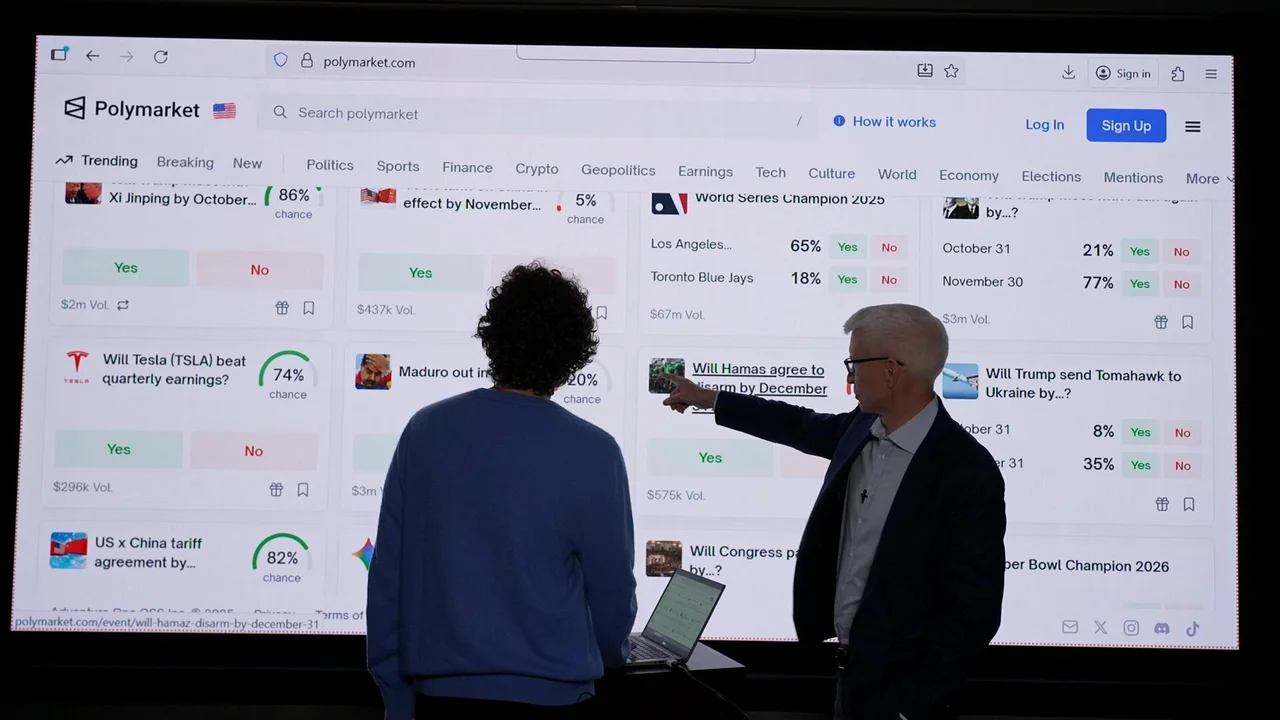
Shayne Coplan, the young founder of Polymarket, is one of the most talked-about entrepreneurs in crypto and startup circles today. His platform, a crypto-powered prediction market, rose from humble beginnings to a globally recognized name, especially after big-event markets like the 2024 U.S. election. Polymarket enables users to bet on real-world events, from politics to culture to sports, and transforms collective beliefs into market probabilities.
Coplan launched Polymarket in 2020. Back then, prediction markets were niche; mainstream audiences rarely considered them. But Coplan saw an opening: people desired more transparent, data-driven forecasts than traditional polls or pundit opinions. He built a platform where users could buy “yes/no” contracts, essentially wagers on future events, using cryptocurrency (USDC on the Polygon blockchain) and smart-contract based settlement.
Polymarket’s ascent wasn’t without challenges. As its popularity surged, especially around high-stakes events like U.S. elections, the platform attracted regulatory scrutiny. In 2022 Polymarket settled with the Commodity Futures Trading Commission (CFTC), paying a civil monetary penalty for operating an unregistered derivatives-type platform. Later investigations, including a search of Coplan’s home by the Federal Bureau of Investigation (FBI), intensified the spotlight.
Through it all, Polymarket now counts among the world’s largest and most influential prediction markets, and Coplan has recently been described as one of the youngest self-made billionaires.
In this article, we draw out what founders can learn from Coplan’s journey.
Lesson 1: Start by solving a clear information problem
Polymarket solves a simple but powerful problem: people want better signals about what might happen in the future. Instead of relying on opinions, pundit commentary or polls, Coplan built a system that transforms collective beliefs into quantifiable probabilities. By letting users put real money (crypto) where their beliefs are, the platform surfaces more honest, incentivized forecasts.
The idea here is to target information asymmetry. Ask yourself, what do people wish they knew, but can’t easily find? What gaps in clarity or data exist? If you build a tool that fills that gap and gives people value (insight, accuracy, transparency), you may have identified a high-leverage problem.
Coplan didn’t try to be everything for everyone. He targeted events people care about (politics, major real-world outcomes), where interest is strong and there’s value in better forecasting. This narrow, high-value focus helped Polymarket gain traction early.
Lesson 2: Launch fast — but build with risk awareness
Coplan started building during the COVID-19 pandemic, working from home and coding early versions of Polymarket quickly. This fast execution gave him a first-mover advantage; the platform was ready to ride major global events, which increased interest and liquidity.
But speed came with costs: Polymarket’s early operations did not meet regulatory standards for derivatives exchanges. In 2022, the CFTC penalized the company and ordered it to cease offering unregistered contracts.
For entrepreneurs: moving fast is often a competitive edge, you can seize windows of opportunity that slower or more cautious players miss. But that speed must be balanced with basic legal, compliance, and operational hygiene. When a product touches regulated or sensitive domains (finance, gambling, public outcomes), early groundwork around compliance, user controls, and transparency may save you from trouble later.
Lesson 3: A contrarian idea can gain traction when backed by real outcomes
Polymarket’s core idea, that crowd-based betting markets can out-predict polls or pundits, was contrarian. Many thought such a model wouldn’t scale, especially in a mainstream context. But Coplan believed in the power of collective intelligence, and insisted on building a platform that made those predictions actionable and transparent.
Once Polymarket’s forecasts proved accurate (especially around big events), that contrarian vision gained legitimacy. Media, investors, and everyday users began to pay attention.
Founders should remember: being contrarian isn’t enough. You must build mechanisms to test, measure and demonstrate that your unconventional approach works. Early data, even from a small sample, can validate your thesis. If the evidence checks out, you position yourself to draw attention, support, and credibility.
Lesson 4: Building in controversial or regulated spaces means you must expect external scrutiny
Because Polymarket deals with speculation on real-world events, many of them political, it inevitably attracted media attention, public debate, and regulatory inquiries. In November 2024, federal agents searched Coplan’s home as part of a criminal and civil probe into Polymarket’s U.S. operations.
This is a risk every founder should account for when operating at the intersection of finance, public interest, or regulated activity. Launching early, building fast, or operating cross-border may trigger scrutiny, even if your product delivers value.
Therefore: build compliance plans, set up clear communication policies, prioritize transparency, and be prepared to respond quickly, if things go sideways. Sometimes, governance and legal structure is as important as the product.
Lesson 5: Fundraising works when narrative + evidence + team align
Polymarket attracted serious capital, not just because of a bold idea, but because Coplan and his team could back it up with user activity, volume metrics, and a compelling growth story. In 2025, Polymarket’s valuation surged after investment from major backers, and media described Coplan as one of the youngest self-made billionaires.
For founders raising funds: investors look for three things, a clear vision, validated traction, and a capable team. A bold concept helps open doors. But early metrics, evidence of real demand, and a plan to scale with compliance and structure are often what secure long-term backing.
Also, pick investors who understand your space (regulation, crypto, the underlying industry). Their domain knowledge can help when challenges arise.
Lesson 6: Earn credibility in one niche before expanding too broadly
Polymarket didn’t try to cover every possible event or market at once. Coplan began with a narrow focus, events people were already watching closely. Once the platform earned credibility through accurate predictions and became widely used for high-profile events, expansion became viable.
For entrepreneurs: focus on building a strong case for one core use case first. Prove your value there. Once you have a track record, you can diversify, new features, new verticals, new user segments, with more confidence and less risk.
Expanding too early often dilutes value and drains resources; scaling on a proven foundation helps you grow strategically.
Final Thoughts
Shayne Coplan’s journey, from a college dropout working out of his apartment to founder of a global prediction market, is a mix of insight, speed, and risk. His story shows how spotting an information gap, launching fast, focusing on core value, and handling scrutiny can build a powerful, influential venture.
If you’re building a marketplace, a platform, or a product that touches real-world events or sensitive domains: identify clear problems, move quickly but responsibly, prove your ideas with data, and build credibility before scaling. Coplan’s experience shows that with clarity, conviction, and strategic discipline, opportunities, even in controversial spaces, can become transformative businesses.
Read - Dynamic Pricing: Could This Be the End of Price Tags and What Does It Reveal About Your Company?





Weekly
Newsletter.
