
Dynamic Pricing: Could This Be the End of Price Tags and What Does It Reveal About Your Company?
square.jpg)

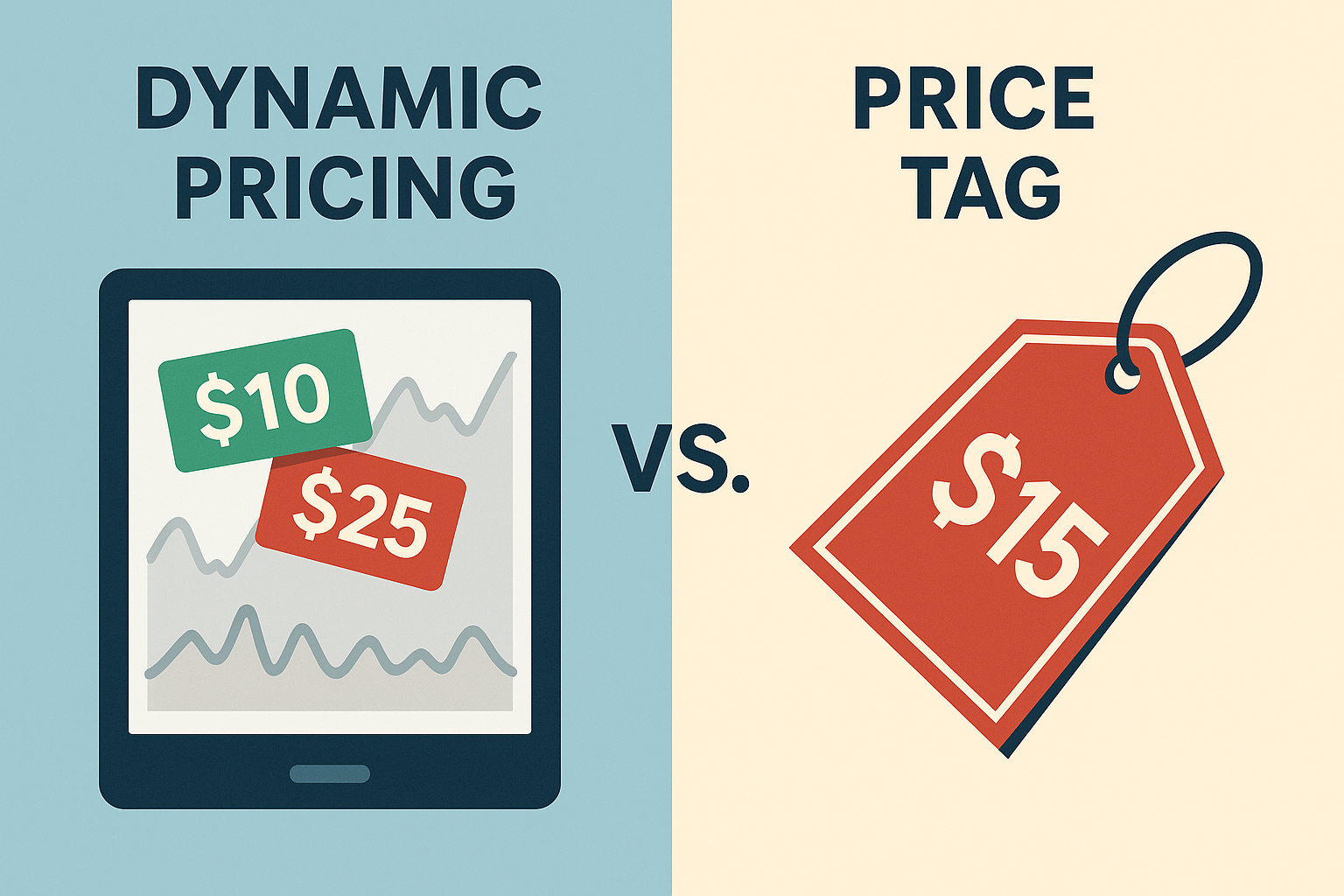
Dynamic pricing is no longer a futuristic Silicon Valley concept. It has quietly threaded its way into nearly every industry; ride-hailing, hospitality, airlines, e-commerce, logistics, streaming, even retail. What began as a complex revenue-management tool for airlines in the 1980s is now powering price decisions for businesses of every size, thanks to AI, real-time data, and algorithmic forecasting.
And for founders, this raises two big questions:
Could dynamic pricing kill the fixed price tag? And more importantly, what does your pricing strategy signal about your company?
Let’s unpack the reality behind this shift, the psychology shaping customer response, and what it all means for startups trying to grow, differentiate, and stay trusted in a world of changing prices.
What is Dynamic Pricing and Why Is It Taking Over
Dynamic pricing is the practice of adjusting prices continuously based on demand, supply, customer behavior, and external conditions. Amazon reportedly changes prices millions of times per day. Uber’s surge pricing, is publicly documented in the company’s own website.
But they are not alone. Airlines were the earliest adopters, building sophisticated revenue-management models that have been explained in-depth in this article. Hotels use a similar model, and major online travel agencies openly disclose their price-fluctuation systems.
What has changed is accessibility. SaaS tools and APIs now let even small startups implement dynamic pricing without hiring a full pricing team. Companies like Stripe, Paddle, and Shopify publish guidance on experimentation and pricing optimization, making the once-complex playbook available to everyone.
This democratization has shifted dynamic pricing from “enterprise-only” to “default strategy” across emerging digital businesses.
The Disappearance of Price Tags
If price tags represent stability, transparency, and a shared sense of fairness, dynamic pricing challenges all three. As algorithms replace manual price-setting, the fixed price tag, both physically and conceptually, faces an existential threat.
Retail giants like Amazon and Walmart, for instance, have been experimenting with digital shelf labels in physical stores. Grocery chains in Europe have already deployed electronic labels that automatically adjust prices based on inventory levels and time of day. Airlines and e-commerce platforms have moved so far beyond fixed pricing that customers expect variability.
This shift is redefining how consumers think about value, and how startups communicate that value.
The question isn’t whether price tags will disappear, but whether they already have.
The Psychology Behind Dynamic Pricing
Humans don’t respond to price changes logically. They respond emotionally. Research published in the Journal of Consumer Research shows that customers perceive fairness based not on absolute numbers, but on transparency and context.
This is why people tolerate airline price swings but revolt when an Uber ride doubles unexpectedly. It’s also why dynamic pricing succeeds brilliantly in some sectors and fails dramatically in others.
Customers accept variability when:
- The rules are understood (air travel, hotel nights).
- The value is clear (seasonal demand, scarcity).
- The change is predictable (time-based or usage-based pricing).
Customers reject variability when:
- They feel targeted individually.
- The company appears secretive or manipulative.
- The pricing model feels intentionally confusing.
For founders, this is the real lesson: it’s not the algorithm that determines success. It’s perception.
What Dynamic Pricing Says About Your Company
Pricing is not just about revenue. It’s a cultural marker. It reveals what your company values, how it treats customers, and how it positions itself in the market.
If your pricing changes frequently, customers will infer things about your brand, some flattering, some not so flattering.
A dynamic pricing model might communicate that your company is:
Data-driven and efficient - you optimize constantly, test hypotheses, and respond to real-time information. This is a strong signal for investors, partners, and enterprise clients.
Focused on extracting maximum value - this can be perceived positively; smart, strategic, growth-oriented, or negatively, as opportunistic.
Customer-segmented and personalized - done transparently, this reads as tailored and thoughtful. Done poorly, it feels discriminatory.
Adaptive and market-aware - you understand demand, seasonality, and customer behavior. In volatile markets, adaptability is a survival skill.
But dynamic pricing can also signal the opposite:
Lack of pricing identity - frequent changes may look like uncertainty rather than innovation.
Opportunism over fairness - if customers feel manipulated by opaque pricing, trust erodes fast.
Short-term thinking - if dynamic pricing seems focused on short bursts of revenue rather than lifetime value, your brand may feel transactional.
Your pricing strategy is, in many ways, your company culture externalized.
The Founder’s Dilemma: Efficiency vs. Trust
Founders today face a unique challenge. On one hand, dynamic pricing can significantly increase revenue. On the other, it can compromise brand loyalty if implemented carelessly.
Transparency becomes non-negotiable.
Companies like Spotify and Netflix provide public guidance when prices change, explaining economic conditions and value additions. This is part of why their adjustments, while occasionally controversial, rarely spark consumer outrage.
Uber learned this lesson painfully. Its early surge-pricing controversies became a case study. The issue wasn’t surge pricing itself; it was communication.
Customers will accept almost any pricing strategy when they feel respected. This is the real competitive advantage.
Should Startups Adopt Dynamic Pricing?
For SaaS founders, dynamic pricing can intelligently match value to usage. Cloud companies like AWS have successfully used consumption-based pricing, an approach they explain extensively in their documentation and white papers. It allows customers to grow into your product rather than pay upfront for value they haven’t realized.
For e-commerce startups, dynamic pricing drives competitiveness, inventory optimization, and higher conversion rates. But you must ensure transparency, or risk losing trust.
For marketplace or logistics startups, real-time pricing is often necessary to balance supply and demand.
But there’s one critical caveat: you need enough data.
Dynamic pricing without clean data is like flying a plane with a cracked windshield. You’ll see the world, just inaccurately enough to crash.
Founders should avoid dynamic pricing until:
- They understand customer value deeply.
- Their data systems can support accurate forecasting.
- They can communicate changes clearly and confidently.
- Their product positioning aligns with price variability.
Dynamic pricing works best when your brand is built around flexibility, personalization, or efficiency. It works poorly when your brand is built on stability or predictability.
Will Customers Eventually Accept a World Without Price Tags?
The short answer is yes, and no. Younger consumers, accustomed to real-time everything, already expect prices to behave like weather forecasts. They grew up with Uber surge alerts and airline fare trackers. For them, dynamic pricing is normal. Traditional consumers prefer clarity and fairness. They anchor emotionally to fixed prices because they communicate trust.
The future likely lies in hybrid pricing: Clear base prices with dynamic components layered transparently on top. Think of electricity tariffs, cloud-computing bills, or airline ticket classes. The structure is predictable; the variables make sense. This is where most startups will thrive, combining consistency with intelligent flexibility.
What This Means for the Next Generation of Founders
Founders who master pricing psychology will outperform those who simply “set prices.” Dynamic pricing is not just a tactic; it is a philosophy.
It requires honesty, data discipline, and strategic clarity. It forces you to articulate your value, understand your customers deeply, and build systems capable of real-time decision-making. Most importantly, it demands that you treat pricing as a branding tool, not just a revenue lever. Whether price tags disappear or not, one thing is certain: transparency will be the currency of trust.
Companies that rely on opaque dynamic pricing will face increasing scrutiny, not just from consumers, but regulators. The UK’s Competition and Markets Authority has already begun examining dynamic pricing in digital markets. Similar inquiries exist in the U.S. and EU. Founders who get ahead of this curve, those who build fair, clear, and value-aligned pricing systems, will be the ones who scale sustainably.
Final Thought
Dynamic pricing is not the villain or the hero in this story. It is a tool. A powerful one. What determines whether it becomes the end of price tags, or the beginning of a new trust-driven era, is how founders choose to use it. Your pricing strategy tells the world who you are, what you believe, and how you value the people who pay you.
Read - Unlikely Entrepreneurs: The Success Story of Anastasia Beverly Hills





Weekly
Newsletter.
