
5 Reasons Every Founder Needs a Mentor
square.jpg)

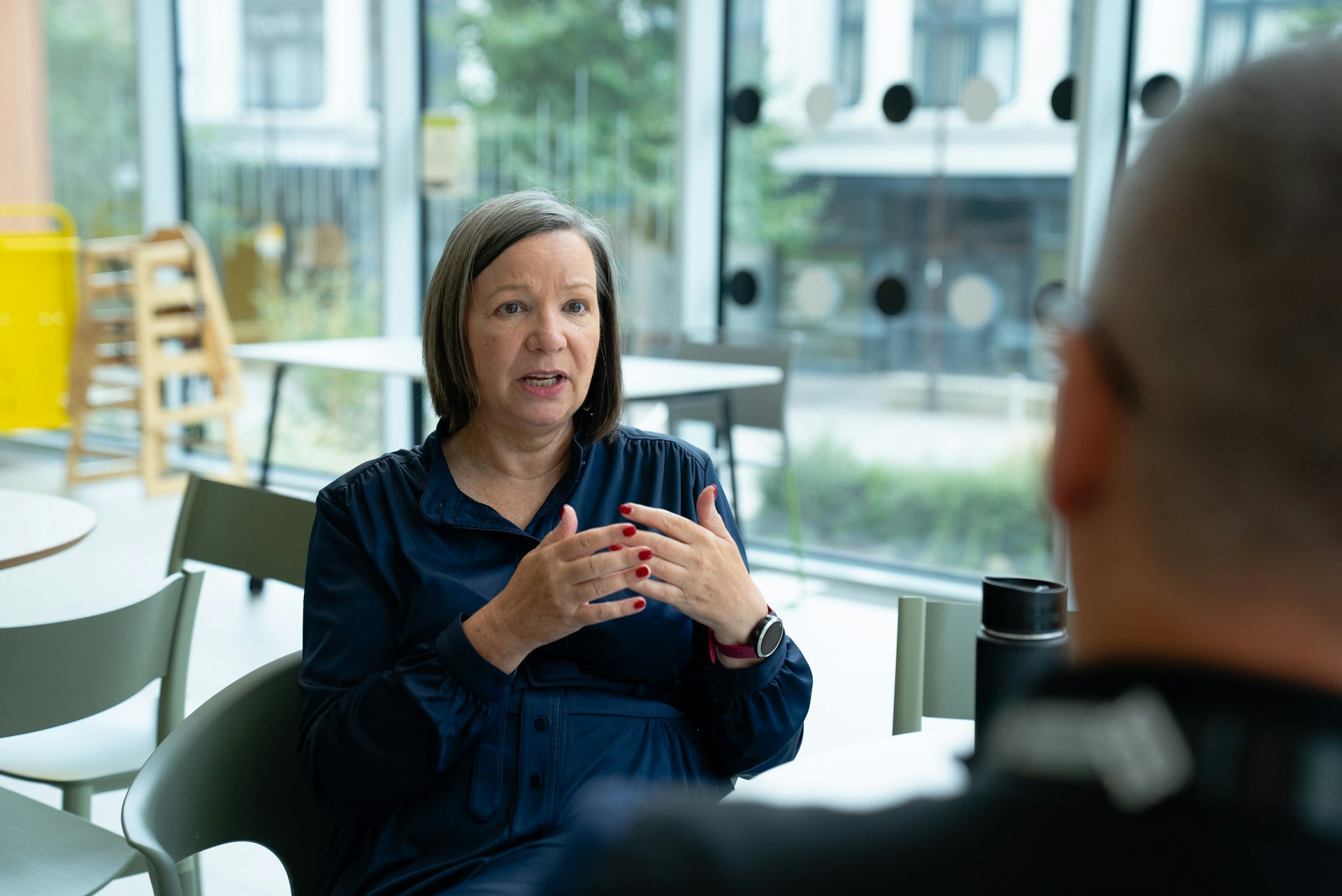
Founders are paid to decide under uncertainty. But solitary decision-making is costly ansd here’s why; blind spots multiply, mistakes compound, and the same avoidable errors repeat across teams and markets. Having a mentor doesn’t remove uncertainty, but could shorten the runway. Mentors translate hard-won experience into sharper questions, faster decisions, and fewer wasted cycles. Here is an evidence-based case for why every founder should intentionally find and work with a mentor.
1) Mentors accelerate fundraising and product-market progress
Founders who learn from experienced operators don’t just get advice, they learn patterns that investors and customers recognize. Multiple ecosystem studies show a material difference: startups that intentionally tap mentors, track key metrics, and engage with founders who learn from outside expertise raise substantially more capital and accelerate user growth compared with teams that operate in isolation. One widely cited analysis found that startups that benefited from helpful mentors raised roughly 7× more funding and saw ~3.5× better user growth.
What that means in practice is that mentors help founders avoid false-positive product moves (features that look clever but don’t move metrics), frame narratives investors can believe, and prep founders for the specific diligence questions investors will ask. Founders should measure the mentor’s value by concrete downstream outcomes (demo-day performance, traction improvements, conversion lifts) rather than by the mentor’s title alone.
2) Mentors open meaningful networks and reduce search costs
One of the hardest and most underpriced resources for early startups is access to customers, to channel partners, to investors who trust referrals. Ecosystem reports emphasize how global connections and curated introductions materially change scaling trajectories for startups in every stage and geography. Mentors selectively introduce founders to the right people and format those intros so they convert (short context, why the intro matters, clear next step). The Global Startup Ecosystem reporting and related analyses repeatedly show the outsized value of high-quality connections in founder outcomes.
The key point here is to treat introductions as deliverables. When a mentor offers an intro, ask: “What does success look like for this meeting?” and set a measurable follow-up (e.g., a follow-up email within 48 hours, a one-meeting pilot with a potential customer). This turns warm connections into measurable progress.
3) Mentors increase survival, resilience, and execution quality
Beyond fundraising, mentorship correlates with higher venture survival and longer lifespans of startups. Studies show that mentored ventures are materially more likely to survive early inflection periods and less likely to collapse during the first critical years, estimating about 60–70% improvement in survival or longevity metrics for mentored founders versus those without mentoring.
Why? Mentors help founders anticipate common failure modes such as; premature scaling, channel dependence, hiring mistakes, and cash-runway miscalculations. A good mentor acts as an early warning system, they’ve seen the “when” and “how” of problems many times before and can prioritize fixes that preserve runway. For founders, the practical takeaway is to keep mentors close during major cadence shifts (hiring a senior exec, scaling sales, pivoting GTM) and treat their feedback as high-leverage simulations rather than mere opinions.
4) Mentoring cultivates coachability and better decision frameworks
Not all founders benefit equally from mentorship. Research into entrepreneurial coachability shows that founders who are receptive, disciplined, and willing to test advice convert mentorship into measurable venture outcomes. Coachability is a multiplier: it’s the mechanism by which experience transfers from mentor to founder. Studies find that coachable entrepreneurs are more successful in accelerator programs and more satisfied with mentorship relationships.
Operational advice for founders:
- Turn mentor sessions into experiments: define a single hypothesis and an outcome metric before you act.
- Keep a short “what I tried / what happened / next step” log and share it with your mentor, that makes guidance repeatable and measurable.
- Prioritize mentors who push for evidence (metrics, experiments) over those who give purely prescriptive opinions.
Coachability also determines whether mentorship scales inside your company: founders who model being coached create a learning culture where senior hires also accept feedback, compounding the mentor’s value across the organization.
5) Mentors deliver psychological steadiness and accountability
Founding is an emotional marathon. Research and practitioner surveys show that a very high proportion of leaders, from executives to startup founders, attribute critical career breakthroughs to mentors, and that mentored employees and founders report higher confidence and job satisfaction. For example, surveys repeatedly find that a large majority of people with mentors value the relationship highly and report improved confidence and professional clarity.
This psychological dimension matters commercially: founders who have a trusted sounding board make clearer tradeoffs under stress, accept corrective feedback earlier, and are less likely to make panic-driven hires or panic pivots that destroy runway. Mentors also function as accountability partners. A meeting cadence with a mentor (biweekly or monthly) creates gentle constraints that dramatically increase the chance that a founder follows through on difficult but high-impact tasks.
How to pick and operationalize a mentor (practical checklist)
Choose mentors with complementary skills to your founding team and a track record relevant to your immediate inflection points (fundraising, channel expansion, hiring). Prefer mentors who ask for metrics, request follow-ups, and push for short, measurable experiments.
A minimal operational template:
- Agree on an objective for the first 90 days (e.g., improve onboarding conversion from X→Y, secure 3 investor intros).
- Establish cadence and deliverables (e.g., 45-minute call every two weeks + shared one-page progress doc).
- Define a measurable outcome and the evidence that will show progress.
(Short checklist - only three highly actionable items.)
- Set a 90-day measurable objective.
- Ask for at least one warm intro per month.
- Log experiments and outcomes, and share before each call.
Common pitfalls and how to avoid them
- Mistaking status for fit. Big-name mentors are valuable only if they understand your stage and market. Prioritize fit over prestige.
- One-way relationships. Mentoring must feel useful for both parties; offer value back (insights, customer access, future equity vesting) so the relationship endures.
- Vague asks. Don’t request “general advice.” Bring 1–2 tight problems and metrics; mentors can give targeted, high-leverage guidance only with context.
Measuring mentor ROI
Treat mentoring like any other investment. Track small, attributable outcomes: conversion lift on a funnel you redesigned based on mentor input, time-to-hire improvements after process changes, or successful investor meetings where the mentor’s intro shortened due diligence. Over three to six months, good mentorship should show measurable delta on at least one critical metric tied to your 90-day objective.
Here is the fact: mentors are leverage
A mentor is leverage, they fold decades of pattern-recognition into minutes of advice. The empirical record, from ecosystem reports to peer-reviewed studies and surveys, shows mentorship is not a luxury or feel-good perk: it’s a quantifiable advantage in fundraising, survival, execution quality, and founder wellbeing. Founders who treat mentorship systematically (measuring outcomes, insisting on accountability, and choosing fit over status) convert that advantage into faster, less risky scaling.
If you’re rebuilding your advisor network today, start with a specific inflection you can measure in 90 days, and treat mentor relationships as experiments that you optimize like any other growth lever.
Read - From Tech Innovations To Geopolitical Trade Wars: Here Is What Founders Need to Know About 2026





Weekly
Newsletter.
