
SpaceX IPO: Is History About to Repeat Itself?
square.jpg)

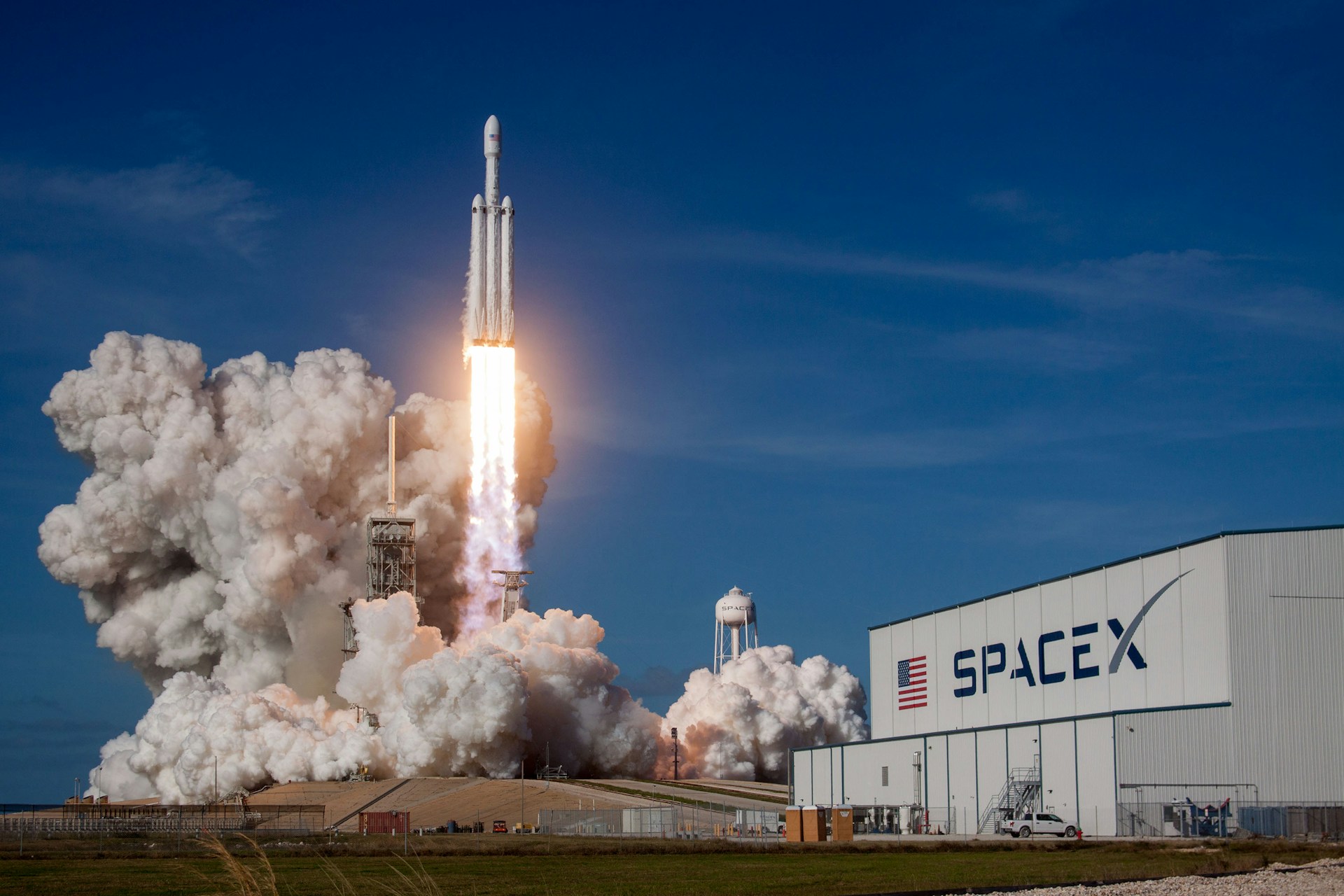
On the morning of June 12, 2026, Elon Musk stood behind a Nasdaq-branded podium at SpaceX's headquarters in Starbase, Texas — surrounded by roughly 5,000 employees — and rang the opening bell remotely. Simultaneously, in New York, President and COO Gwynne Shotwell and CFO Bret Johnsen handled the in-person festivities at the Nasdaq MarketSite. The ticker was simple: SPCX. The price was $135 per share. And with that, what had spent 24 years as the most audacious private experiment in human history became a public company.
"I gave SpaceX less than a 10% chance of succeeding at all," Musk said during the opening ceremony, broadcast live by Nasdaq. By the close of trading that Friday, the stock closed at $160.95 — a 19% gain on its first day. SpaceX's market capitalisation crossed $2 trillion. The largest initial public offering in history raised $75 billion, more than doubling the previous record set by Saudi Aramco in 2019. The financial world had found its new cathedral.
But here is the thing about cathedrals: they are expensive to build, they take decades to complete, and every so often the scaffolding comes down, and you see something that doesn't quite match the original vision. For founders building companies of their own, watching what happens to SpaceX over the next 18 months may be one of the most instructive case studies of this era. Not because SpaceX is a fraud — it emphatically is not — but because what comes after the bell tells a different story than the bell itself.
The Setup: What SpaceX Actually Is Now
To understand the SpaceX IPO, you first have to understand that the company that went public on June 12 is not the company most people think they know. The SpaceX of popular imagination is rockets and Mars and reusable Falcon 9 boosters landing themselves upright in the ocean. That company is real. But it is now one segment of something considerably stranger and more complicated.
In February 2026, SpaceX acquired xAI — Musk's artificial intelligence venture — in an all-stock deal completed on February 2, 2026. xAI, which itself had previously acquired X (formerly Twitter) on March 28, 2025, was folded into SpaceX's corporate structure. The resulting entity filed its S-1 with the SEC on May 20, 2026, disclosing three distinct business segments: Space (rocket launches), Connectivity (Starlink), and AI (xAI, Grok, and X). This is no longer a rocket company. It is a rocket company fused with a satellite internet utility fused with an AI platform fused with a social media asset.
2025 TOTAL REVENUE - $18.7B
(Source: SpaceX S-1 Prospectus, May 2026)
CAPITAL RAISED - $75B
(Largest IPO in history)
ORBITAL LAUNCHES IN 2025 - 165
[Sixth consecutive annual record (BryceTech)]
The numbers from the S-1 are, depending on your temperament, either thrilling or sobering. SpaceX's Starlink division generated $11.4 billion in revenue in 2025, accounting for 61% of total company revenue. Starlink's EBITDA grew 86% to reach $7.17 billion in 2025 at 63% margins. Once the satellite constellation is in orbit, each new subscriber adds high-margin recurring revenue at near-zero marginal cost. That is an elegant business model.
The Space segment — rocket launches for outside customers — generated $4.1 billion in revenue in 2025 but posted a $657 million operating loss, almost entirely because $3 billion of that segment's spend went into Starship research and development alone. The AI segment generated $3.2 billion in revenue but posted a $6.35 billion operating loss in 2025. And the company as a whole reported a GAAP net loss of $4.9 billion for the year, followed by a $1.94 billion operating loss in Q1 2026 alone. These are not rounding errors.
The entity that came to market defies simple categorisation. It is a rocket company, a satellite internet utility, an AI platform, and a social media asset — simultaneously. No prior IPO has attempted to bundle launch monopoly economics with broadband infrastructure growth and an AI platform bet at this scale.
The Hype Machine: Valuation, Market Buzz & Musk's Gravitational Pull
The journey to $1.77 trillion did not happen overnight. Not long ago, SpaceX shares traded in secondary markets at valuations well below $400 billion. By December 2025, CFO Bret Johnsen was privately briefing existing investors on a potential 2026 offering. By the time the IPO priced on June 11, 2026, the company's implied valuation had more than doubled from earlier private estimates. In roughly 18 months, the company's secondary market price had gone from a fraction of what it became to the sixth-largest market cap ever listed publicly.
The retail enthusiasm surrounding this offering was unlike anything seen in recent memory. Retail investors placed approximately $100 billion in orders through platforms like Robinhood, Fidelity, and SoFi — a figure that alone exceeded the company's $75 billion fundraising target. Prediction market platform Polymarket had traders pricing SpaceX above a $2 trillion market cap post-IPO with high confidence. Hyperliquid launched a synthetic perpetual futures contract tracking SpaceX's pre-IPO valuation, doing over $300 million in daily volume before the stock even opened publicly.
Part of this is Starlink's story, which is genuinely compelling. Subscriber count more than doubled in 2025, from 4.4 million to 8.9 million, and hit 10.3 million across 164 countries by the end of Q1 2026. The service has expanded across consumer, enterprise, maritime, and aviation markets, and its direct-to-cell capability is reshaping what is possible in markets where terrestrial infrastructure has always been insufficient. For investors seeking exposure to the next generation of global communications infrastructure, Starlink is a category-defining asset.
But a significant part of the hype is simply gravitational pull. Musk exists at a scale where his presence distorts rational pricing. Every company he touches — Tesla, Neuralink, The Boring Company — attracts a premium that has less to do with discounted cash flows and more to do with the market's belief that wherever Musk points, the future eventually follows. That is not irrational, exactly. His record justifies some premium. But premiums inspired by personality rather than fundamentals have a historical tendency to mean-revert.
Wall Street was predictably enthusiastic. Dan Ives of Wedbush called the IPO "an important moment for the broader tech sector," framing it as the AI Revolution taking its next step forward. Capital Economics suggested a well-received SpaceX IPO would likely open the gates for many more companies to follow. But not everyone was cheering.
The Cracks: What the Bears Are Watching
The most striking dissent came from Morningstar. Morningstar analyst Nicolas Owens issued a fair value estimate of $780 billion for SpaceX — less than half the IPO valuation of $1.77 trillion. His note was unusually direct: the company is significantly overvalued, and investors will have the opportunity to buy in at a more attractive price following the IPO. Owens ran three scenarios for the AI business: in the most optimistic case, it could create approximately $1.3 trillion in value, but assessed the probability at just 7%. The probability that the AI infrastructure plan would be shelved entirely? 43%.
The xAI acquisition is the central tension in the SpaceX investment thesis. xAI's Grok chatbot is real, its Colossus data centre is real, and its compute infrastructure is genuinely significant. But the AI segment generated $3.2 billion in revenue against a $6.35 billion operating loss in 2025. Of SpaceX's $20.7 billion in total capital expenditure in 2025, $12.7 billion went to AI infrastructure, including the Colossus data centre in Memphis. Grok has not demonstrated material market share gains against ChatGPT or Anthropic's Claude. The AI thesis is enormous in ambition and deeply unproven in execution.
THE BULL CASE
✓ Starlink throws off $7B EBITDA at 63% margins — a software-like business
✓ ~90% share of global commercial launch market by mass-to-orbit (Investing.com / S-1)
✓ Starship, if it delivers, cuts launch costs by an order of magnitude
✓ 10.3M Starlink subscribers across 164 countries as of Q1 2026
✓ $22B in cumulative federal contracts from NASA, DoD & Space Force (Gwynne Shotwell / Reuters)
✓ 165 orbital launches in 2025 — 51% of all global orbital launches (BryceTech)
THE BEAR CASE
✗ GAAP net loss of $4.9B in 2025; $1.94B operating loss in Q1 2026 alone
✗ AI segment burned $6.35B in operating losses in 2025 on $3.2B revenue
✗ Avg. Starlink revenue per subscriber fell from $99/month (2023) to $66/month (Q1 2026)
✗ Morningstar fair value: $780B — less than half the IPO price
✗ Musk retains ~82.4% voting power; public shareholders have no real governance voice
✗ Starship delays would unravel the entire cost-reduction thesis
Then there is governance. According to the final prospectus, Musk holds approximately 82.4% of total voting power following the IPO through a dual-class structure where his Class B shares carry ten votes each against one vote for public Class A shares. He simultaneously serves as CEO, CTO, and Chairman of the Board. As the Harvard Law School Forum on Corporate Governance noted, this structure means public shareholders cannot force the removal of directors, cannot veto strategic decisions, and cannot block transactions. The xAI acquisition — which added a loss-making AI and social media business to SpaceX's balance sheet — was completed entirely under this structure. Public investors had no vote and no recourse.
There is also the question of average revenue per Starlink subscriber. ARPU declined from $99 per subscriber per month in 2023 to $66 by Q1 2026 — a 33% drop in three years. The S-1 is candid about why: international expansion into markets where $99 is too expensive, and the introduction of cheaper tiers like Starlink Mini. Subscriber volume is growing faster than revenue per subscriber — a trade-off that works beautifully at scale but introduces margin pressure if it continues.
One final risk worth noting: SpaceX has accumulated a total loss of $41.3 billion since it was founded in 2002, disclosed in the prospectus. And Elon Musk himself has warned of a 'genuine risk of bankruptcy' if Starship fails to achieve a flight rate of at least once every two weeks. That is an unusual thing to read in an offering document for a company priced at $1.77 trillion. But it is there.
The Precedent: Facebook and Snapchat's Post-IPO Lessons
For anyone tempted to dismiss the bear case as noise, it helps to look at what happened the last two times the market priced a technology company on pure belief in its future trajectory rather than its present fundamentals.
Facebook went public in May 2012 at $38 per share, valuing the company at approximately $104 billion — the largest tech IPO in US history at the time. The stock closed flat on its first day, then began falling. By September 2012, just three and a half months later, the stock hit an intraday low of $17.55 — a collapse of more than 53% from its IPO price. Market skepticism centred on one specific question: can this company monetise mobile? It took until August 2013 — over a year — for the stock to return to its IPO price. The investors who bought in the first week spent a year underwater. Those who waited bought the greatest compounding asset of the following decade.
Snapchat's story is more cautionary. Snap priced its IPO at $17 in March 2017, raised $3.4 billion, and surged 44% on its first day. Within days, analysts issued bearish targets as low as $10. The stock began a slide that erased the vast majority of its value. Unlike Facebook, Snap never convincingly answered its monetisation questions. The user growth slowed, the revenue model remained precarious, and the initial valuation — built on potential rather than performance — proved wildly optimistic.
The pattern is almost formulaic:
High-profile tech IPO. Retail frenzy. Euphoric first-day pop. Then the market sobers up and asks the question it forgot to ask in the excitement: does the current price match the current reality, or only a hoped-for future one?
SpaceX is not Snapchat. Starlink is a real, profitable, growing business. SpaceX launched 85% of all satellites globally in 2025, holds cumulative federal contracts totalling approximately $22 billion, and operates the largest active satellite network ever deployed. The bones of this business are solid. But what happened to Facebook and Snap in their post-IPO periods was not about whether the business was real — it was about whether the price paid on day one reflected reality or aspiration. On that question, SPCX sits closer to the edge than the opening-day cheers suggested.
The Verdict: What Founders Should Actually Watch
The SpaceX IPO will be studied in business schools for decades. It represents the first time a company has attempted to take a rocket manufacturer, a global internet utility, and an AI platform public simultaneously under a single ticker. The audacity of that is genuinely remarkable. Whether it was wise is a different question.
For founders, there are three things worth watching as SPCX begins its life as a public company:
First: What happens when the lockup expires.
Insiders — early employees, pre-IPO investors — are typically restricted from selling for 180 days after an IPO. The lock-up structure for SPCX is non-standard, replacing the conventional single release with a multi-stage schedule. But when supply of shares in the market eventually increases, price discovery accelerates. For companies where the IPO price reflects a premium to current fundamentals, lockup expiration often brings uncomfortable clarity.
Second: Whether xAI turns a corner.
The entire bull case for SpaceX's $1.77 trillion valuation requires xAI to evolve from a massive loss-maker into something that justifies the infrastructure spend. Of SpaceX's $20.7 billion in total capital expenditure in 2025, $12.7 billion went to AI infrastructure. Grok needs to capture meaningful market share. The Colossus data centre network needs to generate revenue at scale. If those milestones slip — which AI timelines historically do — the valuation comes under sustained pressure from the segment that was supposed to make it defensible.
Third: Whether Starship delivers on its commercial cadence.
Starship development topped the list of risk factors in SpaceX's own S-1 prospectus. Fully reusable rockets represent a potential order-of-magnitude reduction in launch costs. If Starship begins regular commercial flights in the second half of 2026, it unlocks entirely new economics for everything SpaceX touches. If it doesn't — if the development timeline extends — expect the market to reprice SpaceX's long-term assumptions materially.
The market's initial verdict, at $160.95 on day one, was celebratory. But markets are not verdicts — they are questions posed in real time. The question SPCX is currently asking is whether a company losing nearly $5 billion per year on a GAAP basis, absorbing an AI venture burning through billions annually, and trading at an extreme valuation multiple relative to any peer, can sustain a valuation that makes it one of the largest publicly traded companies in America.
The answer will not come on day one. It rarely does. Facebook answered it — eventually, triumphantly. Snap answered it the other way. Which trajectory SpaceX follows depends on whether the business underneath the story grows fast enough to meet the price the story has already been given.
Read - The Starbucks Korea AI Disaster and What It Means for the Future of Marketing





Weekly
Newsletter.
