
Disrupt 2026: A Battlefied Every Startup Founder Should Care About
square.jpg)

What Exactly Is TechCrunch Disrupt 2026?
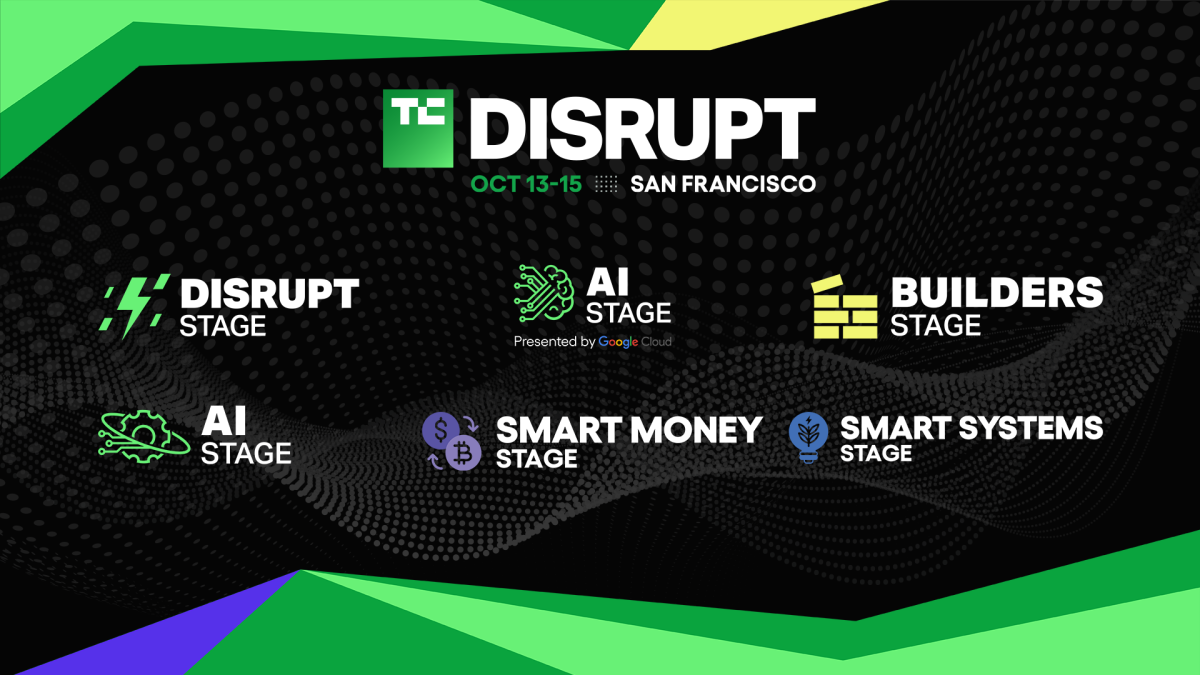
Every October, San Francisco briefly becomes the center of gravity for the global startup world. That gravitational pull has a name: TechCrunch Disrupt. The 2026 edition returns to Moscone West from October 13 to 15, and the numbers alone explain why founders keep clearing their calendars for it. Organizers expect more than 10,000 attendees, over 200 sessions spread across six stages, and more than 250 speakers pulled from the ranks of founders, operators, and venture capitalists shaping the industry right now.
Disrupt is not a single conference so much as six conferences happening in parallel. TechCrunch has organized this year's stages around six distinct themes:
- The Disrupt Stage for big-picture conversations on AI and venture;
- The Builders Stage for tactical, in-the-trenches advice on fundraising and hiring;
- The AI Stage, presented by Google Cloud, for how agents and generative AI are rewriting enterprise software;
- The Smart Money Stage for fintech, payments, and stablecoins;
- The Smart Systems Stage for the infrastructure behind AI,
- From datacenter energy to robotics; and the AI in the Real World Stage, where the conversation moves from AI demos to real deployment in defense, manufacturing, and industrial settings.
Running alongside all six, on the Disrupt Stage and a dedicated Pitch Showcase floor, is Startup Battlefield, the pitch competition that has become Disrupt's signature event.
Why Founders Should Care About Disrupt 2026
For a founder deciding whether a three-day trip to San Francisco is worth the cost of a ticket, a flight, and time away from the product roadmap, the honest answer depends on what the trip is meant to buy. For many founders, Disrupt's greatest value isn't the presentations themselves but the concentration of investors, operators, and media in one place: the same room holds investors who write checks, journalists who write coverage, and operators who have navigated many of the challenges growing companies commonly face.
That concentration is measurable. TechCrunch has built and maintained CrunchMatch, its founder-investor matching platform, specifically to turn a crowded exhibit floor into scheduled, purposeful introductions rather than hallway luck. The Expo Hall exists for the same reason: to potentially compress months of networking into three days. For an early-stage founder, that is the actual pitch of Disrupt: not inspiration, but density.
There is also a simpler, more self-interested reason to care in 2026 specifically. This year's programming leans hard into the question every founder is currently being asked by their own investors: what happens to a company once artificial intelligence (AI) stops being a novelty and starts being infrastructure? Many sessions on the AI Stage explore that shift, with enterprise leaders addressing what actually kills AI deals once a company moves past the pilot phase.
The Builders Stage lineup takes a related but sharper angle: how do you build a durable company in a market obsessed with AI, when your company is not itself an AI model or agent business? That is a question most founders outside the frontier-lab bubble are quietly asking themselves right now, and Disrupt includes an entire track focused on these questions.
What to Expect on the Ground
Upon arriving at Moscone West, the first thing most attendees notice is scale. Six stages running simultaneously means the real skill at Disrupt is triage: deciding which sessions are worth the walk and which are better caught later as summaries. Founders who get the most out of the event tend to map their three days before they arrive, picking one stage as a home base per block rather than sprinting between all six.
The center of gravity, though, remains Startup Battlefield. Two hundred companies, selected out of thousands of applicants, present across the Disrupt Stage and the Pitch Showcase Stage, with a top 20 competing live for a $100,000 equity-free prize judged by a panel of venture investors. Even founders with no plans to pitch tend to camp out near this stage, because it offers one of the fastest ways to see, in six-minute increments, what an experienced VC panel considers fundable right now.
Beyond the stages, expect the event to function as a compressed fundraising and hiring cycle. Side conversations in the Expo Hall, informal meetups tied to specific sectors, and the alumni programming around past Battlefield winners all create a second, unofficial layer of programming that often matters as much as the official agenda. Founders who have attended before consistently describe the value less in terms of what they heard on stage and more in terms of who they met between sessions.
What History's Startup Battlefield Winners Teach Us
Disrupt's credibility is not built on this year's marketing copy. It is built on a fifteen-year track record that founders can actually check. Startup Battlefield has been running for more than fifteen years, and its alumni list reads like a partial history of modern software: Dropbox, Cloudflare, Discord, Fitbit, Mint, and Trello all pitched on that stage before the world had heard of them. More than 1,700 companies have competed in the program to date, collectively raising over $32 billion and producing more than 250 exits, including acquisitions by Microsoft, Google, Salesforce, Uber, and Amazon.
What the history actually teaches founders is more useful than the headline numbers suggest. Winning was never the point. TechCrunch's own retrospective on where Battlefield alumni ended up notes that Discord competed as a scrappy game studio called Hammer & Chisel, not as the communication platform it later became, and that many of the program's most consequential companies did not win their year.
The exposure, the press access, and the permanent line on a pitch deck mattered more than the trophy. TechCrunch has been explicit that every company selected for the Startup Battlefield 200 gets the same investor and media access, whether they make the top 20 or not. For a founder evaluating whether to apply, that is the detail worth sitting with: the network compounds regardless of the scoreboard.
There is a second, quieter lesson in the numbers: the alumni network eventually starts investing in itself. Dropbox, a Battlefield alum, later acquired DocSend, another Battlefield alum, in 2021. The event does not just launch companies in isolation; it builds a standing ecosystem that keeps transacting with itself years after the pitch decks are forgotten.
Is Your Startup Ready for the Stage?
None of this means every founder needs a Disrupt ticket this October. A pre-seed team without a product to show, or a solo founder mid-pivot, may get more value from six focused weeks of customer interviews than from three days in a crowded hall.
But for founders approaching a raise, testing a go-to-market story in public for the first time, or simply trying to understand where investor attention is actually pointed heading into 2027, Disrupt 2026 is shaping up to be one of the more concentrated rooms available this year.
The real question Disrupt has always asked founders is not "can you win the pitch competition," but "are you ready to be looked at closely by the people who decide what gets funded next." Whether this year's cohort answers that question the way Dropbox and Cloudflare once did is, as always, something only the next few years will tell us.
read Inside HBR's Founder Sales Research: What the Study Actually Found



Weekly
Newsletter.
