
What Warren Buffett’s Exit Means for the Startup and Venture World
square.jpg)

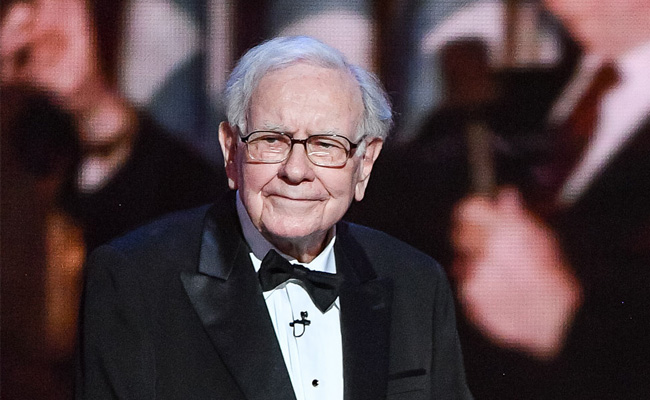
On December 31, 2025, Warren Buffett officially stepped down as CEO of Berkshire Hathaway, ending a six-decade run that reshaped modern investing and defined how generations of investors thought about capital allocation. At 95, the “Oracle of Omaha” handed operational control to longtime lieutenant Greg Abel, marking a historic transition in one of the world’s most influential corporations. Greg Abel now leads the conglomerate, though Buffett remains chairman of the board, and he has already signaled continuity with the firm’s traditional investment philosophy.
For the financial world, this transition is more than a succession story. It’s a symbolic shift in how capital is allocated at the largest scales, one that intersects in meaningful ways with the startup and venture capital industry. As Buffett heads into a new chapter, the models of value creation that he championed are meeting their challengers: innovation-driven enterprises, fast-moving technology markets, and venture capital as a driver of economic evolution.
The End of an Era
Warren Buffett’s leadership of Berkshire Hathaway began in the late 1960s, when he gradually transformed a failing textile mill into one of the largest and most diversified corporations on the planet. Under his stewardship, Berkshire amassed a portfolio of iconic businesses and equity stakes that have delivered astounding returns. Investors who held Berkshire stock since Buffett began guiding the firm have seen cumulative gains measured in the millions of percent, far surpassing the broader market over decades.
But beyond the metrics, Buffett’s approach embodied a philosophy: value investing, long time horizons, deep understanding of business fundamentals, and capital preservation. He famously warned against investing in businesses he did not understand, shunned speculative assets like Bitcoin (which he once branded “rat poison squared”), and built his reputation on compound returns sourced from companies with predictable cash flows and durable moats.
In May 2025, Buffett surprised many by declaring he would step down at the end of the year and recommending Greg Abel, his vice chairman for non-insurance operations, as his successor. This decision, while long planned behind the scenes, signaled that the Berkshire era defined by a single iconic capital allocator was drawing to a close.
A Symbolic Pivot in Capital Allocation
The markets’ initial reaction to Buffett’s departure was telling. Berkshire’s shares dipped slightly in early trading after the transition, even as broader indices climbed, underscoring not a deep structural problem but a psychological shift among investors adjusting to a post-Buffett world.
Buffett’s presence as CEO was always more than a managerial role, it was a market signal. When he made an investment, the world took note; when he held cash, markets interpreted that as wisdom rather than caution. His retirement as CEO doesn’t mean the end of his influence, he remains chairman and has openly said he’ll stay connected, but it does mean that the era of the individual investment sage dominating a trillion-dollar conglomerate is over.
This matters for startups and venture capital because the era that follows is less about choosing undervalued industrial assets and more about identifying and enabling the builders of tomorrow’s economy.
The Buffett Model vs. The Startup Model
To understand the broader implications, it helps to contrast Buffett’s philosophy with that of the startup and VC worlds.
Buffett’s model focused on:
Predictability - investing in companies with stable earnings and clear lines of sight for future cash flows.
Long horizons - holding assets for decades.
Capital preservation - avoiding speculative or unproven technologies.
Value orientation - buying companies priced below intrinsic value.
By contrast, the startup and venture model centers on:
Innovation potential - backing unproven ideas with the possibility of outsized growth.
Rapid scaling - seeking market-disrupting business models.
Risk-driven returns - accepting high uncertainty for asymmetric upside.
Talent and technology as primary assets.
Where Buffett’s Berkshire thrived in industries like insurance, railroads, and consumer brands, many of today’s most valuable companies, in AI, cloud computing, biotech, and decentralized finance, were either outside his circle of competence or too nascent to evaluate using traditional value metrics.
In recent years, Berkshire’s portfolio demonstrated caution toward the technology wave that has defined financial markets in the 21st century. While the firm did initiate a position in Alphabet, its overall exposure to high-growth tech has remained moderate compared to the explosive valuations seen in companies birthed from venture capital ecosystems.
Why This Shift Matters to Startups
Buffett’s retirement highlights several critical points for founders, investors, and the broader ecosystem:
- The definition of “great business” is evolving.
In Buffett’s prime, a great business was one with predictable earnings and durable competitive advantages. Today, many of the world’s most transformative companies, like those leveraging AI and network effects, may not fit that traditional mold in their early years but nevertheless create exponential value. Venture capital plays a central role in identifying and funding these high-growth opportunities. - Capital is more distributed and democratized.
Where Berkshire once symbolized the pinnacle of capital allocation, venture capital funds, angel networks, and decentralized finance mechanisms now channel investment to ideas early and rapidly. Capital markets are no longer dominated by a handful of gatekeepers with decades of experience and conservative doctrines. - Speed and innovation trump tpredictability.
Buffett built his empire by optimizing for stability. In contrast, venture capital thrives on volatility, it assumes most bets will fail but that a few will generate returns that justify the risk. This philosophy is a match for markets where disruption is constant and technological change accelerates business cycles. - Founders may be the new capital allocators.
In many cases, successful founders not only build businesses but also become their own allocators of capital through subsequent ventures, accelerator programs, and early-stage funds. This evolution, from builder to investor, reflects a shift in who defines and captures value in the economy.
The Psychological Impact on Markets and Capital
Buffett’s departure also invites reflection on how capital markets perceive leadership and strategy. Even with Buffett remaining chairman and Greg Abel poised to uphold much of the firm’s investment discipline, there’s a measurable “succession discount” in Berkshire’s stock price. Analysts see this not necessarily as a sign of fundamental weakness but as investor uncertainty, a reminder that confidence in capital allocation has been closely tied to a single individual.
For startups and venture capitalists, this underscores a broader reality: markets increasingly value belief in a vision and conviction in execution over models that promise steady but unspectacular returns. The ventures that attract high valuations today often do so on the basis of narrative as much as fundamentals, a dynamic that would have puzzled many traditional value investors but that is central to innovation ecosystems.
A Narrative of Transition, Not Replacement
It’s important to stress that Buffett’s exit from the CEO role is not a repudiation of his principles. Many companies still seek long-term durable cash flows and predictable earnings, these remain core to much of the global economy. But the transition signals that the center of gravity in capital allocation has shifted, and startup ecosystems are at the heart of that shift.
Greg Abel, while expected to maintain Berkshire’s disciplined approach, now inherits the challenge of deploying an enormous cash reserve, reported to be around $350 billion, in a world where traditional opportunities are scarce, and innovation-led growth beckons.
What Founders Should Take Away
Buffett’s transition offers three lessons for the startup ecosystem:
First, innovation is rewarded where predictability is not required. Founders build companies precisely because they challenge the status quo, creating value that defies conventional valuation metrics.
Second, capital flows to conviction. The energy around AI, biotech, and new technology frontiers shows that investors are willing to back bold visions, even when their paths to profit are unclear.
Third, the next great capital allocator may be a founder, not a fund manager. Through serial entrepreneurship and reinvestment of equity gains, successful founders increasingly direct capital toward high-growth, high-impact ventures.
Buffett’s retirement as CEO may close one chapter in investing history but opens another in which innovation, risk, and rapid scaling define the story. For startups and venture capital, that’s not just good news, it’s confirmation that the future belongs to those who build, not just those who allocate.
Read - The $5 Billion Deal Set to Change the Semiconductor Industry in 2026 And Why It Matters





Weekly
Newsletter.
