
Silicon Valley vs. China’s Tech Ecosystem: Beyond the Startup Myth


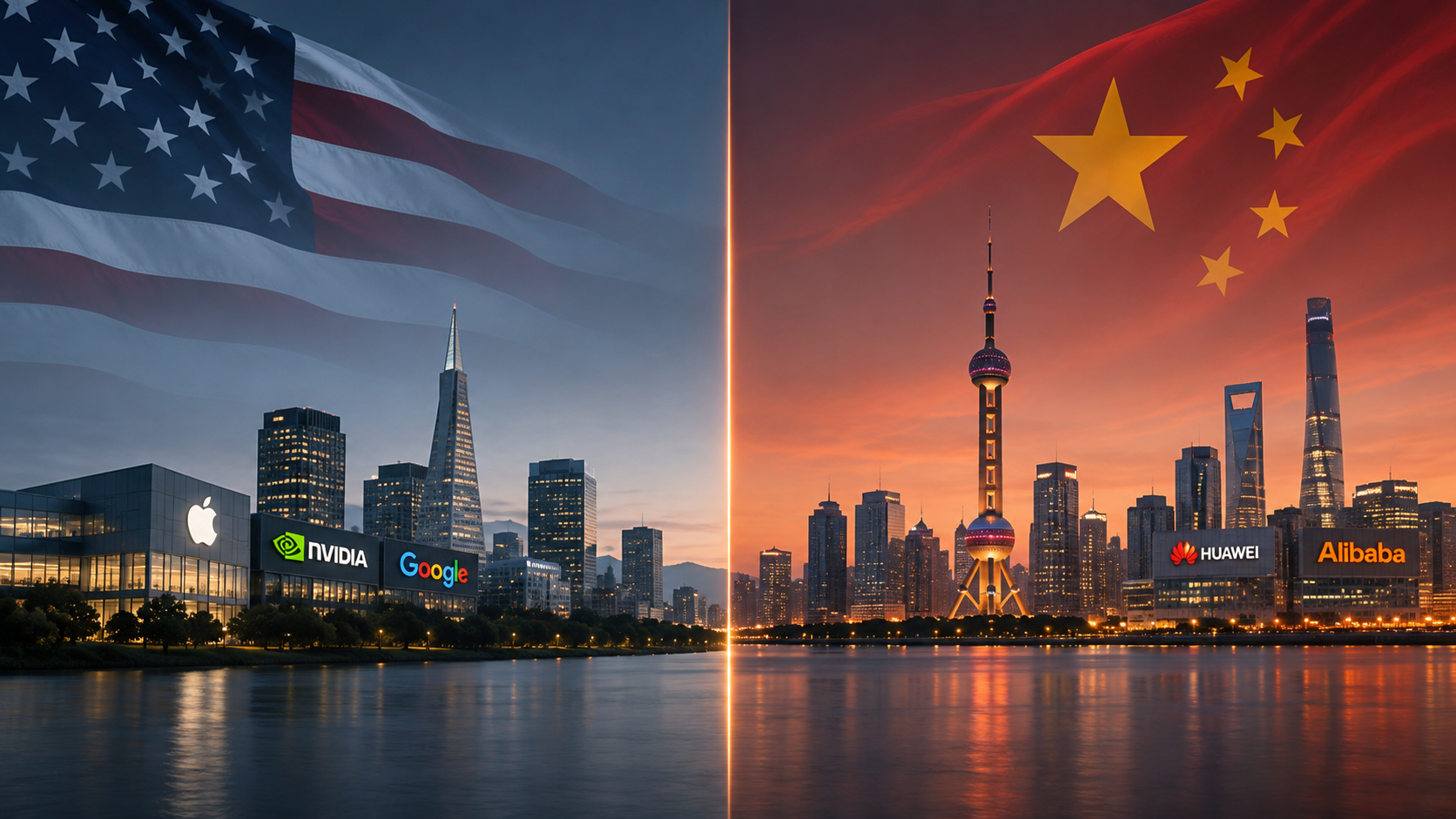
Two ecosystems, two different maps
Silicon Valley: the power of regional concentration
Silicon Valley has become shorthand for a particular kind of economic ambition: a concentrated region where research universities, venture capitalists, founders, engineers, lawyers, experienced operators and ambitious employees repeatedly collide. Its influence extends far beyond the San Francisco Bay Area, but the concentration matters. A founder can move between a university laboratory, an early-stage investor, a specialist law firm and a potential co-founder without leaving the region.
China’s networked technology hubs
China’s equivalent is not one valley. It is a network of cities with different roles. Beijing is a centre of research, artificial intelligence and policy-linked technology. Shenzhen is unusually strong in electronics, hardware, components and manufacturing. Shanghai combines finance, life sciences and enterprise technology. Hangzhou has developed deep capabilities in digital commerce, cloud services and consumer platforms. Other cities contribute specialised clusters, suppliers and talent.
Calling China’s system a single ‘Silicon Valley’ can obscure its central advantage: the ability to connect research, software, manufacturing, logistics and a vast domestic market across several dense urban economies. It also makes direct comparisons difficult. A ranking that measures one metropolitan ecosystem against another does not capture the full reach of China’s national industrial network.
Startup Genome’s 2026 ranking placed Silicon Valley first globally, while Beijing ranked sixth, Shanghai eleventh and Shenzhen nineteenth. The ranking considers performance, funding, market reach, talent and experience, research and AI activity. It is evidence of Silicon Valley’s continuing strength, not proof that every Chinese city or sector is behind. Source
A culture built around risk — and a system built around execution
The US model: financing uncertain ideas
The familiar account of Silicon Valley celebrates the founder who leaves a secure job, raises money on an ambitious idea and treats failure as part of the process. There is truth in that story. US venture capital has long rewarded the possibility of an unusually large outcome, even when the probability of success is low. A company that grows rapidly and captures a large market can compensate investors for many unsuccessful bets.
That model encourages experimentation. It can also produce expensive companies with weak economics, businesses that depend on repeated fundraising, and products whose adoption is slower than their valuations imply. The language of disruption sometimes makes it easier to confuse attention with demand.
The Chinese model: scaling through industrial supply chains
China’s startup culture is often described as more operational, competitive and execution-oriented. Founders in sectors such as consumer electronics, electric vehicles and commerce may face intense pressure to ship quickly, lower costs, improve products and respond to competitors. The proximity of suppliers, component makers, contract manufacturers and logistics providers can shorten the distance between an idea and a physical product.
But the contrast should not be reduced to ‘American creativity’ versus ‘Chinese copying’. Chinese companies have produced original products, business models and technical advances; US companies are also relentless executors. The more useful distinction is institutional. Silicon Valley has a particularly deep market for financing uncertain ideas. China has developed extraordinary capabilities for scaling products through industrial supply chains and large-scale deployment.
The cost of failure differs by company, sector and financing environment. In the United States, a founder may be able to raise another round after a failed experiment if investors believe the team has learned something valuable. Yet bankruptcy, personal guarantees, immigration status, health insurance and reputational damage can make failure costly. In China, policy shifts, local competition, regulatory intervention and access to financing can create different forms of risk. Neither environment makes failure painless.
The funding gap is real, but the headline numbers need context
US venture capital and AI investment
The United States remains the world’s deepest venture capital market. The National Venture Capital Association and PitchBook reported that US venture firms deployed approximately $320 billion across 15,352 deals in 2025. Artificial intelligence accounted for about 65 per cent of deal value. That concentration is striking: a large share of the market’s capital is being channelled into a relatively narrow set of high-cost, high-expectation technology businesses. Source
The same figures show why headline investment totals should not be mistaken for universal investor confidence. US venture fundraising was about $67 billion in 2025, its lowest level in nine years, while exits reached roughly $217 billion. A market can record very large investments while fund managers and limited partners remain selective. The amount invested in a given year is not the same as the amount of fresh capital available to every founder.
The disparity is especially pronounced in artificial intelligence. The OECD estimated that AI companies attracted $258.7 billion in global venture capital in 2025, around 61 per cent of all venture capital investment. US-based AI companies received approximately $194 billion, or about three-quarters of the global total. China-based AI companies attracted about $13.9 billion. These figures describe venture investment into AI companies, not total national spending on AI research, infrastructure or deployment. Source
China’s shift towards domestic and strategic capital
China’s funding picture is more complicated than a simple collapse. GlobalData reported that Chinese venture deal count rose by 16 per cent in 2025 even as total funding value fell by 17 per cent. DealStreetAsia’s Greater China private-market data also showed more deals but lower capital raised year on year. The datasets use different geographic and transaction definitions, so their figures should not be combined. Their shared signal is that activity has continued while average financing has become more constrained. Source
The broader Asian fundraising environment has also been difficult. The OECD’s 2026 Asia Capital Markets Report described a sharp contraction in regional private-market fundraising. In China, domestic investors have become especially important. That can support local strategic priorities, but may also limit international capital and reduce the diversity of funding sources. Source
The practical conclusion is not that China lacks money or that every US startup is better financed. It is that US founders, particularly in frontier AI and deep technology, currently have access to a much larger pool of venture capital willing to fund very large bets. Chinese founders may have to build with tighter financing, pursue commercial revenue earlier or rely more heavily on strategic and domestic sources of capital.
The failure-rate question is harder than it looks
Claims that nine out of ten startups fail are repeated so often that they have acquired the status of fact. In reality, ‘startup failure’ is not measured consistently across countries. Some datasets count business establishments; others track venture-backed companies, registered legal entities or firms that stop reporting. A company may close, be acquired, merge, become dormant or survive as a small business. These outcomes are not equivalent.
The US Bureau of Labor Statistics offers a useful but limited benchmark. Of private-sector establishments born in March 2013, 34.7 per cent were still operating in March 2023. That is a ten-year survival measure for establishments across the private sector. It is not a Silicon Valley startup failure rate, nor is it a direct comparison with Chinese venture-backed companies. Source
China’s enormous number of newly registered business entities cannot be used as a comparable success measure either. Registration does not establish that a company is innovative, venture-backed, operating at scale or commercially sustainable. A credible US–China comparison would require harmonised data on company formation, closures, acquisitions, survival, revenue growth and venture outcomes, segmented by sector and company age. Such a complete comparison is not readily available.
This data gap matters because the two systems produce different kinds of companies. Silicon Valley’s venture model is designed to generate a relatively small number of very large outcomes. China’s industrial ecosystem can support a wider range of manufacturing and commerce businesses, including firms that may never resemble a conventional venture-backed technology startup. Counting only unicorns would miss much of that activity; counting every new business registration would inflate the picture in the opposite direction.
Market size: China’s scale is not the same as purchasing power
China offers founders access to a vast population, dense cities and a sophisticated digital-commerce environment. Its online retail sales reached approximately 16 trillion yuan in 2025, according to China’s National Bureau of Statistics. That creates enormous opportunities for consumer brands, logistics platforms, payment services, retail technology and businesses that can serve large numbers of users. Source
But population and transaction volume are not the same as purchasing power. World Bank data put US nominal GDP at roughly $30.8 trillion in 2025, compared with about $19.5 trillion for China. US GDP per capita was approximately $90,000, against about $13,900 in China. These measures do not tell the whole story about household consumption or regional variation, but they help explain why a smaller US customer base can still support higher prices, larger software contracts and deeper pools of premium demand. Source
China’s domestic market is not a frictionless prize. Competition can be brutal, consumers are price-sensitive in many categories, and regulatory rules can change the economics of a business. Companies seeking to expand internationally must also adapt to different consumer expectations, legal regimes, distribution systems and geopolitical conditions. The US market is not frictionless either, but it offers many startups access to high-value enterprise customers and a global business language that can ease expansion.
For founders, the relevant question is not simply which country has more people. It is where the target customer is, how much that customer can pay, how frequently they buy, what it costs to reach them and whether the business can retain them profitably.
Artificial intelligence: capital and compute versus efficiency and deployment
The US advantage in frontier AI
AI is the clearest current expression of the two ecosystems’ different strengths. The United States has a commanding position in the financing of frontier AI, the development of leading foundation models, advanced chip design, cloud infrastructure and the research institutions that supply talent. The scale of US venture investment gives companies room to pursue costly training runs, recruit scarce researchers and build infrastructure before a business model is fully proven.
That advantage is reinforced by the concentration of major cloud providers, semiconductor designers, model developers and enterprise software companies. It is not merely a matter of writing better algorithms. Frontier AI requires access to compute, energy, chips, data centres, specialised talent and customers willing to pay for new capabilities.
China’s focus on efficiency and deployment
China’s position is more nuanced than the investment gap suggests. Chinese developers have demonstrated that competitive models can be built under tighter resource constraints, while open-weight releases and lower-cost inference strategies have helped spread capabilities. Chinese firms also have opportunities to deploy AI inside manufacturing, logistics, consumer platforms and industrial processes at scale. Domestic competition can push rapid iteration and price reductions.
The constraints are significant. Export controls and restrictions on advanced semiconductor equipment complicate access to the most capable chips. The US has much greater venture funding for AI companies, and Chinese firms face a different regulatory and commercial environment. But model benchmarks alone cannot settle the contest. A model’s value depends on cost, reliability, integration, distribution, data access and the productivity gains it delivers.
For investors, the US may offer more exposure to frontier-model infrastructure and high-growth AI platforms. China may offer compelling opportunities in cost-efficient applications, robotics, manufacturing automation and products that embed AI into existing industrial strengths. The boundary is not fixed: both countries are competing across the full stack.
Health technology and biotechnology: different routes from discovery to scale
Healthcare is not one market. It includes drug discovery, clinical trials, diagnostics, medical devices, hospital software, insurance technology, remote care and the application of AI to clinical and administrative work. The US and China have different advantages across these categories.
The US: research, financing and commercialisation
The United States benefits from a mature biotechnology financing system, world-leading research universities, established pharmaceutical companies, specialist investors and a regulatory pathway that, despite its complexity and cost, is familiar to global drug developers. It also has a large market for high-value medical technology and enterprise healthcare software. The difficulty is that US healthcare is fragmented and expensive. Selling into hospitals, insurers and provider networks can be slow, and reimbursement rules can make adoption difficult.
China: clinical development and industrial scale
China has expanded its clinical research and innovative-drug pipeline, while its manufacturing capacity and large patient population can support development and production at scale. Industry surveys have estimated that China accounts for a substantial share of global clinical trials and drug candidates. KPMG’s 2026 life-sciences overview reported 76 innovative drugs approved by China’s National Medical Products Administration in 2025, a sharp increase from the previous year. These indicators point to a more sophisticated biotechnology sector than older assumptions about China as merely a low-cost manufacturing base. Source
Still, trial counts, drug candidates and regulatory approvals are not interchangeable with globally differentiated medicines, successful late-stage trials or profitable international sales. Drug development is a long, high-risk process. Companies must demonstrate safety and efficacy, secure regulatory approval in each market and build the commercial infrastructure to reach patients.
In digital health, China’s scale can support rapid deployment of consumer-facing services and connected devices, while the US has a deeper ecosystem of specialised health software, medical AI research and healthcare technology investment. Both face privacy, clinical validation, reimbursement and interoperability barriers. A startup’s prospects will depend less on national reputation than on its specific product, regulatory pathway and access to health systems.
Electric vehicles and batteries: where China’s industrial advantage is unmistakable
If AI is the most visible contest for technological leadership, electric vehicles and batteries show the power of industrial concentration. China has built a dense network of battery producers, materials suppliers, component manufacturers, vehicle assemblers and logistics companies. This ecosystem allows firms to move from design to production quickly and to compete aggressively on cost.
A concentrated battery and manufacturing ecosystem
The International Energy Agency’s 2026 Global EV Outlook reported that China accounted for around 60 per cent of global electric-vehicle battery deployment in 2025, while the United States accounted for about 10 per cent. China also held an even larger share of several battery manufacturing stages and key materials. These are not marginal differences. They reflect a supply-chain position accumulated through years of investment, policy support, domestic demand and fierce competition. Source
The result is a formidable advantage in product iteration and manufacturing scale. Chinese manufacturers can draw on nearby suppliers, large production facilities and a competitive domestic EV market. The same environment can create overcapacity, price wars and pressure on margins. Scale does not guarantee that every producer will survive or that every company will become globally profitable.
The US retains strengths in vehicle software, advanced engineering, capital markets and high-value technology, but it does not currently match China’s breadth of battery and component production. Building a domestic supply chain requires time, skilled labour, processing capacity, infrastructure and stable demand. For startups working on batteries, charging, power electronics, recycling or vehicle software, the location of customers and industrial partners may matter more than the headline national rivalry.
Robotics: deployment at industrial scale
Factory adoption as a competitive advantage
Industrial robotics is another area where China’s manufacturing base translates into measurable deployment. The International Federation of Robotics reported that China installed approximately 354,000 industrial robots in 2025, around 59 per cent of global installations. The United States installed nearly 38,500. Chinese manufacturers supplied more than half of the robots installed in their domestic market, reflecting the growing capabilities of local producers. Source
These figures measure annual installations, not the total quality of robotics research or the sophistication of every system. They nevertheless indicate the scale of China’s industrial demand and its ability to test automation technologies in factories. A large installed base can generate feedback, integration expertise and opportunities for suppliers.
The United States remains strong in robotics research, software, advanced components and specialised applications. Its challenge is often the economics and pace of deployment across a fragmented industrial base. China’s advantage is not that it has solved every robotics problem; it is that more factories are adopting automation at a scale that can accelerate learning and commercialisation.
Semiconductors and enterprise software: two areas where the picture reverses
Semiconductors: leadership across a complex value chain
Semiconductors are often discussed as if there were a single measure of leadership. In reality, the industry spans chip architecture, design software, intellectual property, fabrication equipment, advanced manufacturing, packaging and materials. US companies and institutions remain central to chip design, electronic-design automation, core intellectual property and several categories of manufacturing equipment. The United States also benefits from alliances with leading producers in Taiwan, South Korea, Japan and Europe.
China has invested heavily in domestic semiconductor capacity and has achieved progress in several segments. Its market size gives local suppliers a powerful incentive to improve. But restrictions on access to advanced equipment and the technical difficulty of producing the most advanced chips at scale remain serious constraints. It is possible for China to be strong in mature-node manufacturing and parts of the supply chain while still facing a gap at the frontier.
Enterprise software: global reach and recurring revenue
Enterprise software offers another US advantage. American companies have built globally recognised platforms in cloud computing, productivity software, cybersecurity, customer relationship management, data infrastructure and developer tools. Their access to international enterprise customers and established software distribution channels has helped create recurring-revenue businesses with high gross margins.
Chinese enterprise software companies operate in a large and sophisticated domestic market, but international expansion can be more difficult because of language, regulation, trust, data governance and geopolitical concerns. In some categories, Chinese firms are highly competitive; in others, US vendors retain a strong global position. The answer depends on the segment rather than a single national score.
What Silicon Valley still does better
A self-reinforcing network for company creation
Silicon Valley’s most durable advantage is the completeness and density of its innovation ecosystem. It combines elite research institutions, experienced founders, specialist investors, technology lawyers, recruiters, cloud providers, global customers and a deep pool of people who have built and scaled companies before. Knowledge moves quickly through formal networks and informal relationships.
The region also has a powerful mechanism for recycling success. Employees from one company become founders of another. Early investors fund new teams. Acquired founders and executives bring capital and experience back into the ecosystem. Successful public listings and acquisitions create liquidity that can finance the next generation of businesses. When this cycle works, the ecosystem becomes self-reinforcing.
The United States also offers access to a large, high-income market and a global financial system that can support companies with long development timelines. For frontier AI, enterprise software, biotechnology and some categories of deep technology, that combination remains difficult to replicate.
Yet Silicon Valley’s advantages come with costs. Housing, salaries and operating expenses are high. Competition for talent is intense. Venture capital can encourage companies to pursue growth before profitability, and valuations can detach from fundamentals. A founder who does not need large amounts of venture capital may find a different location more efficient.
Where China has an edge
From prototype to production
China’s strongest advantage is the connection between technology and industrial execution. In sectors where a product must be manufactured, tested, modified and delivered at scale, the proximity of suppliers and production expertise can be decisive. A hardware founder can benefit from access to components, tooling, factories, packaging, logistics and a large domestic customer base within a relatively integrated system.
The country’s scale also creates opportunities for rapid deployment. A new technology can be tested across large industrial networks and consumer markets. Local governments and national industrial priorities can support infrastructure and strategic sectors, although policy support can also distort competition or create excess capacity.
China’s weaknesses should not be ignored. Capital availability is more uneven, international expansion can be difficult, and regulatory uncertainty can weigh on business models. The domestic market is intensely competitive. Some companies may struggle to translate high production volumes into sustainable profits. A strong supply chain is an advantage, but it does not automatically create a defensible brand, proprietary technology or global customer trust.
The verdict: the best ecosystem depends on the business
On the broadest measure of startup ecosystem performance, Silicon Valley remains ahead. It attracts more venture capital, has a deeper network for financing frontier technology and offers a particularly strong route from research to globally scaled software and biotechnology companies. Its first-place position in the 2026 Startup Genome ranking reflects that breadth. Source
But the idea that China is simply trying to reproduce Silicon Valley misses the more consequential development. China has built a different innovation system, distributed across several cities and closely connected to manufacturing and industrial deployment. In electric vehicles, batteries and industrial robotics, its scale is visible in global production and installation data. In AI and biotechnology, the competition is more fluid and sector-specific.
Which ecosystem should founders choose?
For founders, the choice should begin with the product. A frontier AI company that requires enormous compute budgets, specialised researchers and global enterprise contracts may find the US ecosystem more supportive. A hardware company that depends on fast prototyping, component access and manufacturing iteration may benefit from China’s supplier networks. A biotech company must weigh research partners, clinical strategy, regulatory requirements, capital and access to patients. A digital health startup must understand the healthcare system in which it intends to sell.
For investors, national labels are similarly inadequate. The relevant questions are where the technology is developed, where the product is manufactured, where the customer is located, where the company can raise capital and which jurisdiction governs its data and intellectual property. A company may design in one country, manufacture in another and sell globally.
The contest, then, is not a simple race with one winner. Silicon Valley remains the strongest all-round startup ecosystem, especially for capital-intensive frontier technology and globally scalable software. China has built formidable advantages in industrial scale, hardware, batteries, electric vehicles and factory automation, while making serious advances in AI and life sciences. The next generation of successful companies may not choose one model over the other. They may learn to operate across both.
A practical guide for founders
· Frontier AI and compute-intensive platforms: assess access to US venture capital, cloud infrastructure, specialised researchers and enterprise buyers.
· Hardware, electronics and modular robotics: evaluate Shenzhen and the wider Chinese supplier network for prototyping, components and manufacturing iteration.
· Electric vehicles, batteries and energy storage: examine China’s depth of cell, materials and manufacturing suppliers, while testing the economics of price competition and overcapacity.
· Biotechnology and health technology: choose based on clinical partners, regulatory pathway, patient access, reimbursement and capital requirements rather than national reputation alone.
· Enterprise software: prioritise proximity to high-value customers, data and compliance requirements, distribution channels and the ability to sell internationally.
Also read - 8 Ways to Build a More Efficient Startup Without Hiring More Employees





Weekly
Newsletter.
