
Being Right Isn't a Business Model: What Leopold Aschenbrenner's Hedge Fund Actually Teaches Founders About Thesis, Leverage, and Time Horizon
square.jpg)

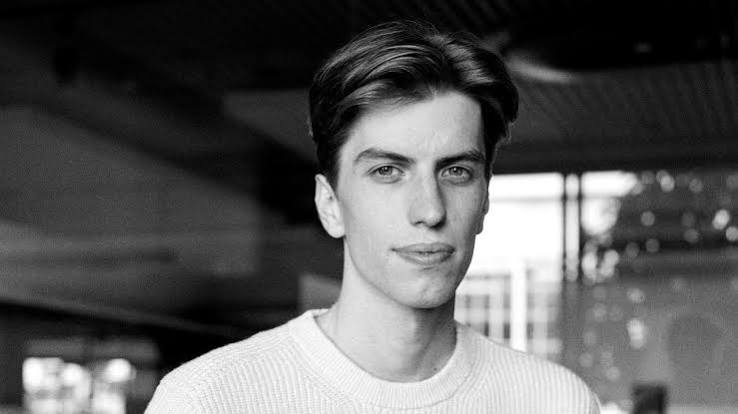
For about eighteen months, Leopold Aschenbrenner was treated as one of the few people who had actually seen the future. A 24-year-old former OpenAI researcher, he left the company in 2024 and published a 165-page essay arguing that superintelligence was arriving faster and would demand far more chips, power, and data-center capacity than almost anyone in Silicon Valley had priced in.
Investors including Stripe cofounders Patrick and John Collison, Nat Friedman, and Daniel Gross backed a hedge fund built directly on that thesis. By June 2026, the fund, Situational Awareness, was reportedly up 439% for the year. Then, over the following weeks, a sharp reversal in AI infrastructure stocks forced it to sell its entire public stock portfolio to Ken Griffin's Citadel at a discount, and assets under management fell from a reported peak of $45 billion to roughly $10 billion.
The easy read on what happened is the one already circulating: a young manager with no prior experience running money got run over by a market that eventually punishes inexperience. One Wall Street coaching-firm founder, quoted in CNBC's reporting on the fire sale, put it this way: "A lot of people saw this blow-up as a matter of not if, but when." That's one experienced observer's read, not a verdict Wall Street reached in unison, and it's also not the most useful lesson available here, because it lets founders reading about this conclude it doesn't apply to them, since they aren't running a hedge fund.
It does apply to them, but not for the reason the age headlines suggest. The more precise story isn't really about youth, it's about a chain with several links: a thesis, a position size, a leverage ratio, a liquidity buffer, and a time horizon. Aschenbrenner's underlying thesis has not been shown to be wrong. What broke was everything downstream of it. This piece traces that chain, because it's a far more useful map for founders than "be more experienced", and it's also the version of the story that's actually supported by what happened.
The Fund That Was Built on Being Right
Aschenbrenner's path to the fund ran almost entirely through insight rather than operating experience. He graduated Columbia University at nineteen as valedictorian, joined OpenAI's Superalignment team, and was dismissed in April 2024 over what OpenAI described as an improper disclosure of internal information, a characterization he disputes. Within months he had published "Situational Awareness: The Decade Ahead," arguing that AI infrastructure, chips, memory, data centers, power, was radically under-priced relative to how fast the technology was progressing.
He launched Situational Awareness LP later that year with backing from the Collison brothers, Nat Friedman, and Daniel Gross, growing the fund from a few hundred million dollars in initial capital to a reported peak of $45 billion within about eighteen months.
Reported figures for the fund's size vary by date and by what, exactly, was being measured. Bloomberg and Fast Company cited assets nearer $20–24 billion in the weeks immediately before the collapse; CNBC later described a peak of $45 billion at the start of July, before large losses took hold. Those numbers aren't necessarily contradictory, they may reflect different measurement dates, or the difference between assets under management and a broader gross-exposure figure that includes leveraged positions.
What's consistent across every account is the mechanism, not the headline number: reported leverage as high as 400% on a book concentrated in a small number of highly correlated AI infrastructure bets.
The Chain Between a Thesis and a Blow-Up
It's worth separating what actually broke from what didn't. Roughly two-thirds of the fund's holdings were in long and short public-equity positions; the rest were private stakes, dominated by a multibillion-dollar position in Anthropic. In early July, AI infrastructure names the fund was long, including SK Hynix, fell sharply, while software names it was short, including Adobe, moved against the position at the same time, according to CNBC.
That combination hit both sides of a single, highly correlated thesis at once. Prime brokers including Bank of America, Goldman Sachs, and JPMorgan Chase, named in reporting from Yahoo Finance and Bloomberg, then pushed for additional collateral as the positions moved against the fund. The reported trigger for the Citadel sale was liquidity and margin pressure, not any announced change in view about where AI economics were heading.
That distinction matters more than the age of the person running the fund. A correct industry call, AI will reshape this market, this technology will get cheap, this customer segment will move online, only tells you which direction to point. It says nothing about how large a position to build around that call, how much leverage to run on top of it, how much liquidity to hold in reserve against a period of being early rather than wrong, or how well your time horizon for being proven right matches the time horizon your capital structure can actually survive.
Aschenbrenner's fund broke somewhere in that chain, position size, leverage, or liquidity buffer, not, as far as the public record shows, at the thesis itself.
What the Collapse Does and Doesn't Tell Us
It's tempting to read the liquidation as proof the thesis was wrong. It isn't, at least not by itself. The fund's own subsequent behavior argues against that reading: weeks after the fire sale, Situational Awareness committed another $400 million to Source Foundry, a private chipmaking-tools startup also backed by Sequoia Capital, bringing its total stake to roughly $500 million at a $5 billion valuation.
A fund that had concluded its AI infrastructure thesis was mistaken would be an unusual one to keep making concentrated bets on AI infrastructure days later. What the collapse does establish is narrower, and for founders arguably more useful: a correct-seeming thesis, expressed through enough leverage and public-market exposure, can force a sale before the thesis has had time to be proven right or wrong on its own timeline.
Borrowing the Judgment You Haven't Earned Yet
None of this means founders with strong theses and thin operating histories should wait a decade before building something. It means the gap between having a correct idea and knowing how to size a bet around it has to be filled from somewhere. Operating judgment is often built through direct exposure to consequences, a cash crunch survived, a leveraged position that behaved worse than modeled, a bad hire that took a year to unwind, but that isn't the only route to it.
Mentorship, structured board oversight, deliberate scenario planning, and studying other people's failures closely can substitute for some of what direct experience would otherwise teach, which is exactly why boards and advisors chosen for having lived through a specific failure mode tend to be worth more than boards chosen for prestige.
It also means treating capital raised on the strength of a thesis differently from capital raised on demonstrated execution. Aschenbrenner attracted prominent backers despite limited experience managing public-market capital, reporting is consistent on that point, whatever the ultimate cause of his dismissal from OpenAI.
Thesis-only capital tends to arrive with less built-in scrutiny than capital that follows a track record, and founders in the same position should build the missing guardrails deliberately rather than treat conviction as a substitute for them.
Most practically, it means separating two sentences that get treated as one: "I believe this will happen" and "I should commit this much of my company to it happening on this timeline." The first is a forecast. The second is a position size, and it should be set by asking what happens if the forecast is right but early, not only by asking what happens if it's right.
What Survives When a Strategy Breaks
Situational Awareness didn't cease to exist. It sold its public-equity book, kept its private holdings including the Anthropic stake, and within weeks was deploying nine-figure sums into a new private position. What ended in July was the fund's most leveraged, most public expression of its thesis, not the thesis, and not the firm.
That's the distinction worth sitting with longer than the headlines about a 24-year-old's very public near-collapse. Being right about the future is a real and rare thing, and Aschenbrenner's underlying view on AI infrastructure may still turn out to be largely correct. But a correct view doesn't come with an automatically correct position size, leverage ratio, or liquidity buffer attached to it, those have to be built separately and deliberately, usually by people who've been wrong about sizing before.
The open question isn't really about one hedge fund. It's how many founders, right now, have a correct thesis and an unexamined answer to the questions that actually determine whether they survive being right: how big a bet, how much leverage, how much reserve, and on whose timeline.
read Why Startups Are Incorporating Abroad in 2026: The New Geography of Company Formation





Weekly
Newsletter.
